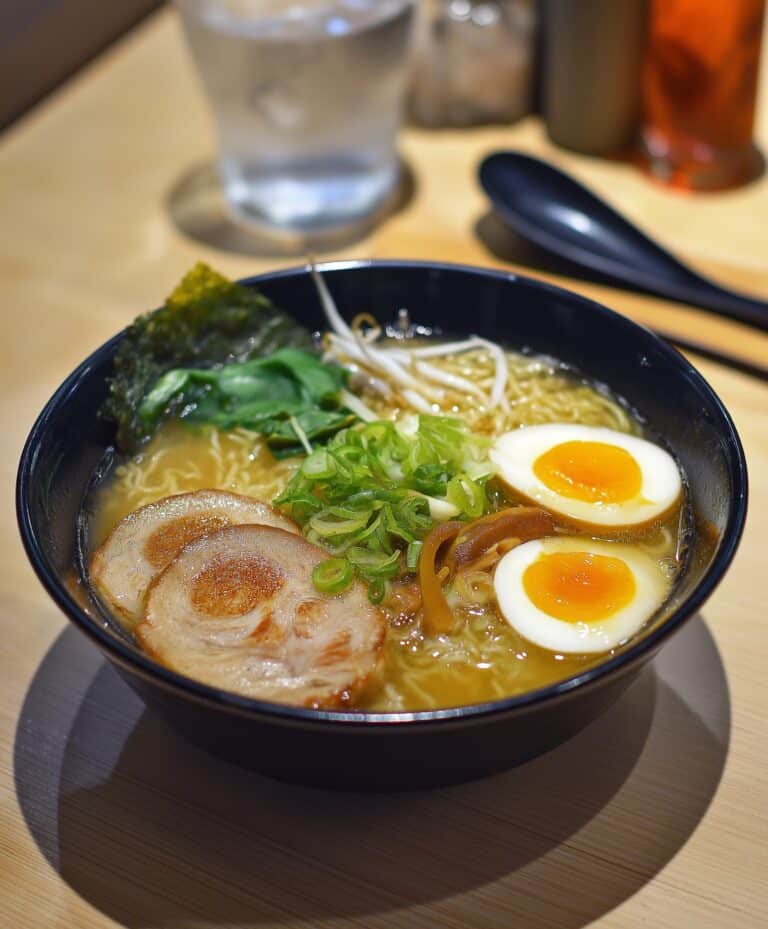
Fiery Chicken Ramen: The Ultimate Spicy Noodle Soup Recipe
Introduction
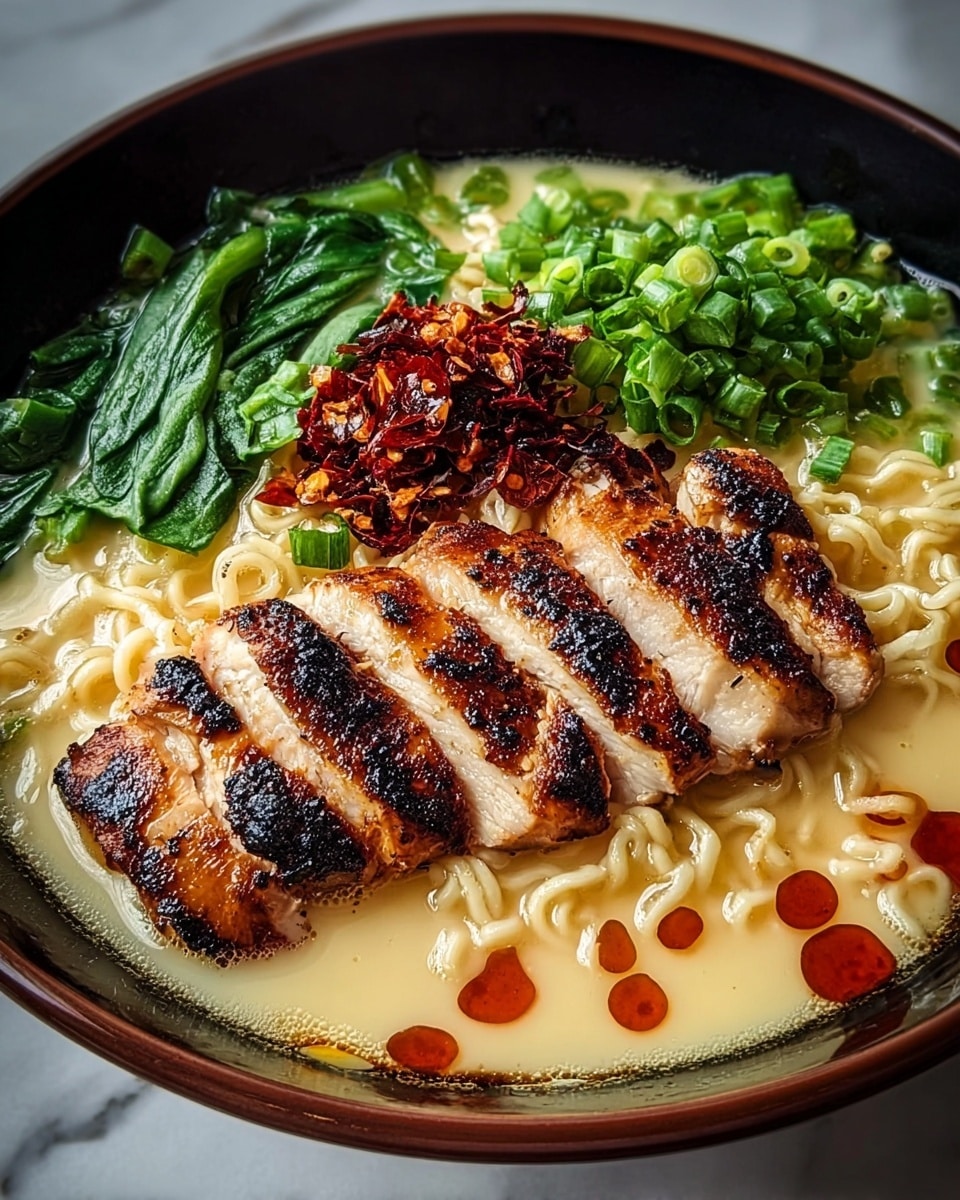
Fiery Chicken Ramen is the ultimate spicy noodle soup that combines tender marinated chicken with a rich, homemade broth and fresh toppings. This recipe delivers a perfect balance of heat, umami, and comforting flavors that’s sure to satisfy your spicy food cravings.
Ingredients
- 2 boneless, skinless chicken breasts (about 6-8 ounces each)
- 2 tablespoons soy sauce
- 1 tablespoon gochujang (Korean chili paste)
- 1 tablespoon rice vinegar
- 1 tablespoon sesame oil
- 1 teaspoon grated ginger
- 2 cloves garlic, minced
- 1/2 teaspoon black pepper
- 6 cups chicken broth (low sodium preferred)
- 2 cups water
- 2 tablespoons soy sauce
- 1 tablespoon mirin (sweet rice wine)
- 1 tablespoon gochujang (adjust to taste for spice level)
- 1 teaspoon sesame oil
- 1 inch ginger, thinly sliced
- 2 cloves garlic, smashed
- 1 sheet kombu (dried kelp, optional)
- 2 dried shiitake mushrooms (optional)
- 8 ounces fresh ramen noodles (or dried, cooked according to package directions)
- 2 eggs
- 1/2 cup corn kernels (fresh, frozen, or canned)
- 1/2 cup sliced green onions
- 1/4 cup bamboo shoots (menma), drained
- 1/4 cup nori seaweed, cut into strips
- 1 tablespoon sesame seeds
- Chili oil (for drizzling, optional)
Instructions
- Step 1: In a medium bowl, whisk together 2 tablespoons soy sauce, 1 tablespoon gochujang, rice vinegar, sesame oil, grated ginger, minced garlic, and black pepper to make the marinade.
- Step 2: Place chicken breasts in a zip-top bag or shallow dish and pour marinade over, coating evenly. Refrigerate for at least 30 minutes or up to 4 hours.
- Step 3: Heat a tablespoon of oil in a large skillet over medium-high heat. Cook the chicken breasts for 5-7 minutes per side until cooked through and internal temperature reaches 165°F (74°C).
- Step 4: Remove chicken from skillet, let rest for a few minutes, then slice thinly against the grain. Set aside.
- Step 5: In a large pot, combine chicken broth, water, soy sauce, mirin, gochujang, and sesame oil. Add sliced ginger, smashed garlic, kombu, and dried shiitake mushrooms if using.
- Step 6: Bring broth to a boil over medium-high heat, then reduce to low and simmer for 30 to 60 minutes.
- Step 7: Remove kombu and shiitake mushrooms. Slice mushrooms and set aside. Taste broth and adjust seasoning as needed, then strain through a fine-mesh sieve.
- Step 8: Bring a pot of water to a boil. Gently add eggs and cook for 6 minutes for soft-boiled or 7 minutes for firmer yolks.
- Step 9: Transfer eggs to an ice bath immediately to stop cooking. Peel and cut in half lengthwise before serving.
- Step 10: Cook ramen noodles according to package instructions. Drain well and divide among bowls.
- Step 11: Ladle hot broth over noodles. Top with sliced chicken, corn kernels, green onions, bamboo shoots, nori strips, and halved eggs.
- Step 12: Sprinkle sesame seeds on top and drizzle with chili oil if desired. Serve immediately.
Tips & Variations
- Adjust the amount of gochujang to control the spice level to your preference.
- Use dried ramen noodles if fresh are unavailable, but be sure to cook them according to package instructions to avoid overcooking.
- For a vegetarian version, substitute chicken broth with vegetable broth and omit chicken, adding extra mushrooms or tofu instead.
- Soft-boiled eggs can be prepared ahead and refrigerated for convenience.
Storage
Store leftover broth and cooked chicken separately in airtight containers in the refrigerator for up to 3 days. Refrigerate cooked noodles separately to prevent them from becoming mushy. Reheat broth on the stove until steaming, then assemble the ramen fresh. Soft-boiled eggs are best eaten within one day if stored peeled.
How to Serve
Serve this delicious recipe with your favorite sides.
FAQs
Can I make this recipe less spicy?
Yes, simply reduce the amount of gochujang or omit the chili oil drizzle. You can also replace gochujang with a milder chili paste or add more broth to dilute the heat.
What can I substitute for kombu and shiitake mushrooms?
If you don’t have kombu or shiitake mushrooms, you can skip them or substitute with dried seaweed and fresh mushrooms for a similar umami flavor, though the depth of the broth may vary slightly.